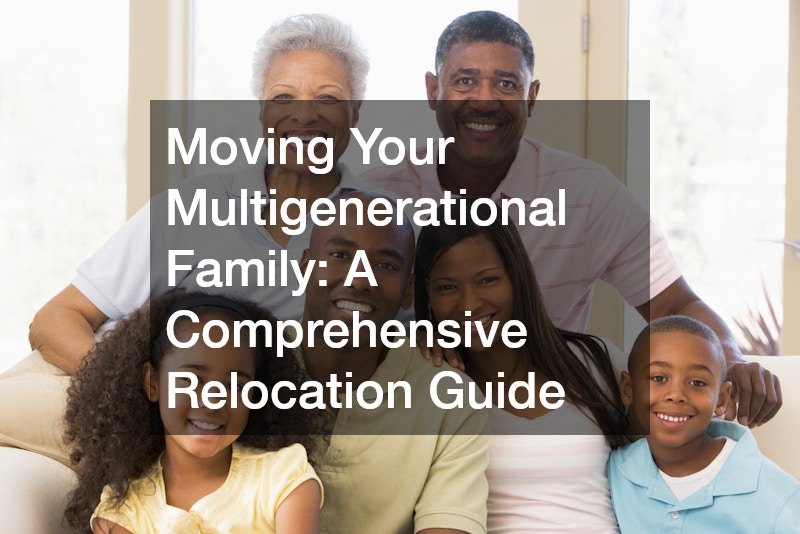

Moving a household is notoriously stressful, and when you are coordinating the needs of growing children, aging parents, and family pets all at once, the complexity multiplies exponentially. Relocating a multigenerational family means you are not just packing boxes; you are transplanting an entire ecosystem of care, education, and daily routines. It is completely normal to feel overwhelmed by the sheer logistics of a “Sandwich Generation” move. The emotional toll of leaving a familiar community, combined with the financial strain of coordinating a large-scale relocation, can test even the most organized families.
The secret to a successful transition is proactive, highly compartmentalized planning. When you break the relocation down into distinct categories—housing, education, senior support, and community integration—the insurmountable mountain becomes a series of manageable steps. By anticipating the specific needs of each generation early in the process, including arranging in home care services for elderly family members, you can prevent gaps in care, avoid educational disruptions, and ensure that every family member feels secure in their new environment.
This comprehensive guide will walk you through the precise steps required to manage a three-generation relocation. By approaching each phase systematically, you can mitigate anxiety and lay a strong, stable foundation for your family’s next chapter.
Securing Accessible and Accommodating Housing

The foundation of a successful multigenerational move is finding a physical space that safely and comfortably accommodates everyone under your roof. This requires looking far beyond simple square footage or neighborhood aesthetics. You must evaluate the daily functional reality of the layout for people of vastly different ages and physical abilities.
Drafting Your Layout and Accessibility Checklist
Before you even contact a real estate agent or property manager, you must define your non-negotiables regarding accessibility. Aging parents may have current mobility limitations, or you may need to plan for future physical decline. Retrofitting a house after you move is incredibly expensive, so prioritizing universal design from the start is crucial.
- Zero-step entries: Look for homes where at least one entrance—whether through the front door, back patio, or garage—does not require navigating stairs. This is crucial for wheelchairs, walkers, and even heavy baby strollers.
- Main-floor living: Ensure there is a bedroom and a fully accessible full bathroom on the ground floor.
- Bathroom safety: Evaluate bathrooms for walk-in showers with low thresholds, reinforced walls that can support the installation of grab bars, and slip-resistant flooring.
- Hallway and doorway width: Standard interior doors are often too narrow for mobility aids. Measure to ensure doorways are at least 32 inches wide, though 36 inches is optimal for seamless turning radiuses.
- Flooring transitions: Avoid homes with sunken living rooms or raised dining areas. Look for hard, flush surfaces like laminate or hardwood rather than thick, plush carpets that can pose a tripping hazard for seniors.
Evaluating Rental Agreements for the Whole Family
Many families choose to rent for a year before buying a home in a new city to get a feel for different neighborhoods without committing to a thirty-year mortgage. However, securing a short-term lease for a large, complex household requires careful negotiation. Finding pet friendly apartments that also offer the square footage and accessibility features required for older adults can be an immense challenge, so you must start your search several months in advance.
Review lease agreements carefully to understand breed restrictions, weight limits, and additional deposit requirements for your animals. You should also ensure the lease allows for extended guests or co-signers if your parents’ financial structure requires it. Some property management companies have strict occupancy limits based on the number of bedrooms, so be transparent about the number of adults and children who will be living in the unit to avoid lease violations down the line.
Assessing Space for Visiting Professionals
When touring potential homes, you must visualize the flow of daily traffic. If your parent relies on in home care services
to assist with bathing, dressing, medication reminders, or meal preparation, the living space needs to accommodate these visiting professionals comfortably without disrupting the rest of the household.
- Dedicated parking: Is there guaranteed street parking, a designated visitor spot, or enough driveway space for a caregiver’s vehicle? If parking is a daily struggle, providers may be late or refuse the assignment.
- Discrete entryways: Does the home have a side door or a layout that allows caregivers to come and go early in the morning without waking sleeping children?
- Work zones: Ensure the kitchen and accessible bathrooms have enough room for two people to maneuver safely. A cramped bathroom makes assisting a senior with bathing dangerous for both the elder and the aide.
Navigating the Local Educational Landscape

For your children, the move represents a massive social and academic shift. Leaving friends and familiar teachers behind is tough, but securing the right educational environment early will give them a much-needed sense of stability and allow you to focus your remaining energy on the rest of the moving logistics.
Verifying District Boundaries Before Signing a Lease
Municipal zoning laws are incredibly strict, and school district boundaries can literally divide a single street down the middle. Never assume that physical proximity to a campus guarantees enrollment there.
- Use official county maps: Do not rely on third-party real estate websites for zoning information, as they are frequently outdated. Always cross-reference potential addresses with the official boundary maps provided directly on the local school district’s website.
- Understand enrollment caps: Even if you are legally zoned for a specific public school, highly rated and rapidly growing districts sometimes reach capacity and are forced to overflow new students to neighboring campuses. Call the district registrar’s office to verify that physical space is available in your child’s specific grade level.
- Research special programs: If your child requires an Individualized Education Program (IEP), 504 plan, or specialized gifted classes, verify that the specific campus you are zoned for has the resources and staff to implement those legal accommodations immediately upon your arrival.
Scheduling Virtual Campus Tours
If you cannot visit your new city in person before the move, you must aggressively pursue virtual evaluations. Request video calls with admissions officers, guidance counselors, or principals to ask pointed, specific questions. You should inquire about student-teacher ratios, anti-bullying protocols, and how the administration actively handles the social integration of mid-year transfer students. Ask to see a sample weekly schedule and inquire about the extracurricular clubs, sports teams, or arts programs available to help your child make friends quickly and establish a sense of belonging.
Auditing Independent Education Options
If the local municipal options do not align with your family’s academic expectations, or if the commute is simply too burdensome, you will need to research independent institutions. Transitioning to a private school in a new city requires navigating rigid application deadlines, entrance exams, and intensive family interview processes. Begin this research at least six to eight months prior to your move. Create a detailed spreadsheet to track tuition costs, hidden fees (like expensive uniform requirements or mandatory technology purchases), financial aid deadlines, and the specific educational philosophy and religious affiliation (if any) of each institution.
Exploring Specialized Learning and Development

Moving is an excellent, natural time to re-evaluate your historical educational choices and ensure your children are currently in an environment that truly supports their individual learning styles and developmental needs.
Aligning Education with Your Parenting Philosophy
Standard educational models, which rely heavily on rote memorization and standardized testing, do not work for every child. If you are looking for an environment that prioritizes self-directed activity, hands-on learning, and collaborative play, you might want to observe the classroom dynamics of alternative education centers in your new city.
For example, touring a local Montessori school can give you profound insight into how mixed-age classrooms and uninterrupted, three-hour blocks of work time might benefit your child’s focus and independence. When evaluating these specialized environments, ask the administration about their teacher certification requirements (ensuring they hold specific credentials from recognized organizations) and how they track academic progress and milestone achievements without relying on traditional letter grades.
Building a Support System for Whole-Child Growth
Education does not happen exclusively within the four walls of a classroom, and protecting your child’s mental, physical, and emotional well-being during a major relocation is paramount. Taking a holistic approach to child development means recognizing that the stress of a move can manifest in unexpected ways, such as behavioral regressions, sleep disturbances, sudden academic struggles, or heightened anxiety.
- Pre-establish medical care: Research and select a local pediatrician long before you move. Have your current doctor forward all medical records, vaccination histories, and developmental growth charts so the new physician is fully briefed and ready to provide care on day one.
- Locate specialized therapists: If your child currently works with a speech therapist, occupational therapist, or child psychologist, secure placements on waiting lists in your new city immediately. Wait times for highly sought-after pediatric specialists can stretch for six months to a year in major metropolitan areas.
- Maintain extracurricular passions: If your child loves competitive gymnastics, playing the piano, or coding, find and enroll them in local studios or clubs before you arrive. Maintaining a familiar hobby provides an incredible emotional anchor and a sense of continuity during a chaotic transition period.
Establishing Your Senior Care Network Safely

Transitioning elderly parents to a new city is often the most legally, financially, and medically complex part of a multigenerational move. While children are remarkably resilient, older adults often suffer from transfer trauma. Any gap in care can lead to severe health consequences, meaning their medical and daily support networks must be fully operational the moment you cross state lines.
Transferring Medical Records and Prescriptions Early
Do not wait until you arrive in your new home to establish a new medical baseline for your parents. You should operate on a strict 30-to-60-day timeline prior to the move to ensure absolute continuity of care.
- Gather physical and digital records: Request complete, unabridged files from their current primary care physician, cardiologist, neurologist, endocrinologist, and any other specialists. Ensure you have signed HIPAA release forms on file to facilitate this transfer.
- Secure a new primary care doctor: Research board-certified geriatric specialists in your new city. Make absolutely sure they are accepting new patients and that they are in-network for your parent’s specific Medicare, Medicare Advantage, or private insurance plan. Schedule an intake appointment for the very first week you arrive.
- Manage pharmacy transitions: Work with the current prescribing doctors to secure a 90-day supply of all essential medications to cover the transition period, as establishing new prescriptions in a new state can be bureaucratically slow. Transfer the prescriptions to a national pharmacy chain that has a convenient 24-hour branch in your new neighborhood.
Vetting Daily Living Assistance Providers
If you are balancing a full-time career and raising young children, you simply cannot be the sole caregiver for your aging parents without risking severe burnout. You must proactively build a reliable support system. Take the time to interview local agencies that provide non-medical home care services, such as help with grocery shopping, light housekeeping, meal preparation, and transportation to local appointments.
When interviewing these agencies via phone or video call, demand absolute transparency. Ask about their caregiver turnover rates, their contingency protocols for handling emergency call-outs, and whether they conduct national, fingerprint-based background checks or just surface-level local checks on their staff. Ensure the contract offers flexible hours so you can scale the support up or down as your family settles into a new routine and assesses the true level of need.
Coordinating Advanced Medical Support
If your parent has highly complex clinical needs—such as requiring sterile wound care, intensive physical therapy after a stroke, or regular IV medication administration—standard non-medical assistance will not suffice. You must proactively coordinate the transfer of clinical home health care across state or county lines. This is a highly regulated process that usually requires a direct doctor-to-doctor transfer of medical orders.
Speak with the discharge planner, social worker, or care coordinator at your parent’s current medical facility. They will need to ensure all necessary insurance authorizations are submitted to the new clinical agency well in advance. This guarantees that a licensed registered nurse or certified physical therapist is legally cleared and scheduled to visit your new home during your first 48 hours of residency, preventing any dangerous lapses in life-sustaining care.
Rebuilding Your Routine and Community Ties

The physical act of moving your belongings is only half the battle; the second, much longer half is emotional and social integration. Your family will not truly feel at home until you have established predictable daily routines and started building a robust local community network.
Bridging the Gap Between School and Dinner
For working parents, the hours between the mid-afternoon school dismissal bell and the end of the corporate workday are a daily logistical puzzle. Securing reliable childcare logistics should be treated with the exact same level of urgency as setting up your internet or turning on your electricity.
Research options for a structured afterschool program in your new neighborhood early on, as the best ones often have lengthy waitlists. Look for programs that offer reliable, safe transportation directly from your child’s new campus to the facility. Carefully evaluate the program’s daily schedule to ensure they offer a healthy, balanced mix of dedicated homework assistance, vigorous physical activity, and unstructured downtime so your child isn’t completely exhausted and overwhelmed by the time you pick them up in the evening.
Creating “Tourist Weekends” to Ease the Transition
The first few months in a new city can feel incredibly isolating for everyone in the house. The fastest way to combat homesickness, prevent resentment, and build positive associations with your new location is to actively explore it together as a cohesive family unit. Make a deliberate, scheduled effort to act like tourists in your own city on the weekends, rather than spending every Saturday unpacking boxes.
Purchasing annual family memberships to local botanical gardens, aquariums, expansive city parks, or childrens museums guarantees that you always have a low-stress, highly engaging family outing available without having to plan heavily or spend a fortune each time. These outings provide neutral, fun ground for the generations to bond, laugh, and create new shared memories. This intentionally shifts the family’s focus away from what they left behind in their old town and toward the exciting, enriching opportunities available in their brand-new environment.
Settling Into Your New Normal
Relocating a household that spans three distinct generations is a monumental undertaking, and it is vital to manage your own expectations regarding how quickly things will fall into place. Expect a messy, emotionally volatile transition period. It takes an average of six full months for adults to feel truly settled and competent in a new city, and it can take even longer for highly sensitive children and routine-dependent seniors to fully adjust to their disrupted lives. Give everyone in the house—including yourself—a massive amount of grace and forgiveness during this time.
To keep the household running as smoothly as possible, consider scheduling a brief “family town hall” meeting one month after the move. Order a pizza, sit around the living room, and use this time to openly discuss what aspects of the new routine are working brilliantly and what logistical bottlenecks still need tweaking. This ensures that minor, solvable frustrations are addressed openly before they fester and turn into major family resentments.
Finally, whenever you feel overwhelmed by the unpacked boxes or the complex scheduling, remember the core “why” behind this massive effort. While the logistics of moving are undeniably exhausting, creating a shared living environment where grandparents can actively watch their grandchildren grow, where children learn empathy by assisting their elders, and where you can ensure the safety, health, and well-being of your entire family under one roof is an incredibly beautiful and deeply rewarding achievement.