- Start on your knees to get comfortable with the board’s movement before standing.
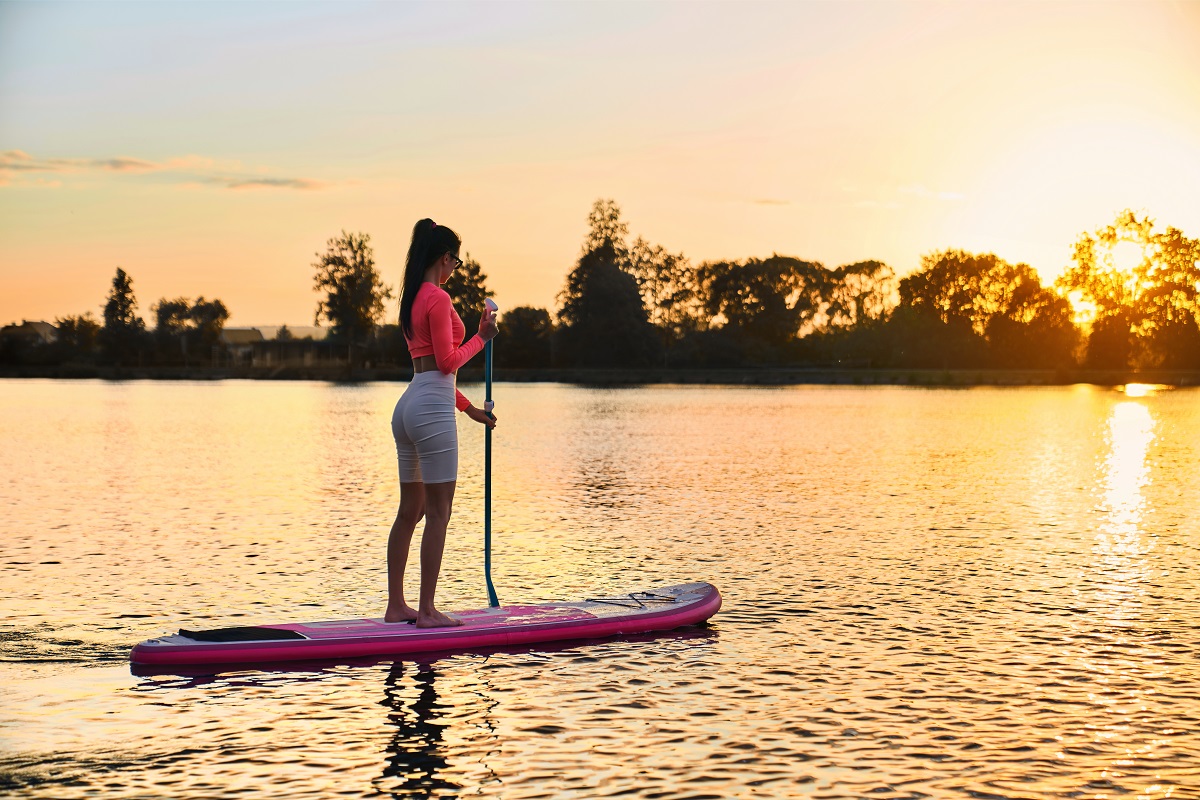
- Find your center of gravity by keeping your feet hip-width apart, knees slightly bent, and core engaged.
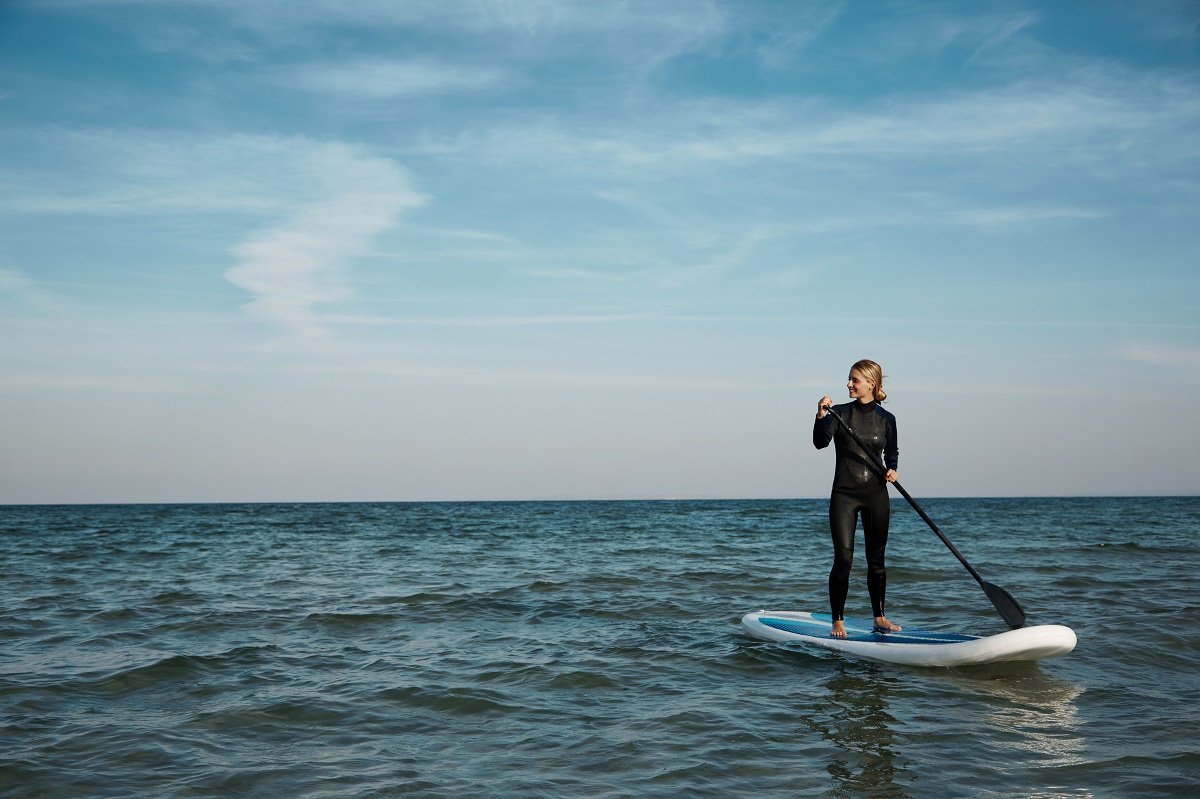
- Stand up slowly, keeping your eyes forward, knees bent, and weight evenly distributed.
- Use small adjustments and your arms to maintain balance, and rely on your paddle for stability.
- Practice core-strengthening exercises and slow, steady breathing to improve balance.
- Avoid common mistakes like looking down, locking knees, or gripping the paddle too tightly.
- Embrace falling as part of learning, and practice both on the water and off to build confidence.
Paddle boarding is one of the most fun ways to enjoy the water while getting a solid workout. But if you’re new to the sport, standing on a paddle board without tipping over can feel impossible. The good news? With the right techniques, mindset, and practice, anyone can master their balance and enjoy calm, confident paddling. In this guide, we’ll walk you through everything you need to know to stand on a paddle board without losing your balance.
Why Do People Struggle to Stand on a Paddle Board?
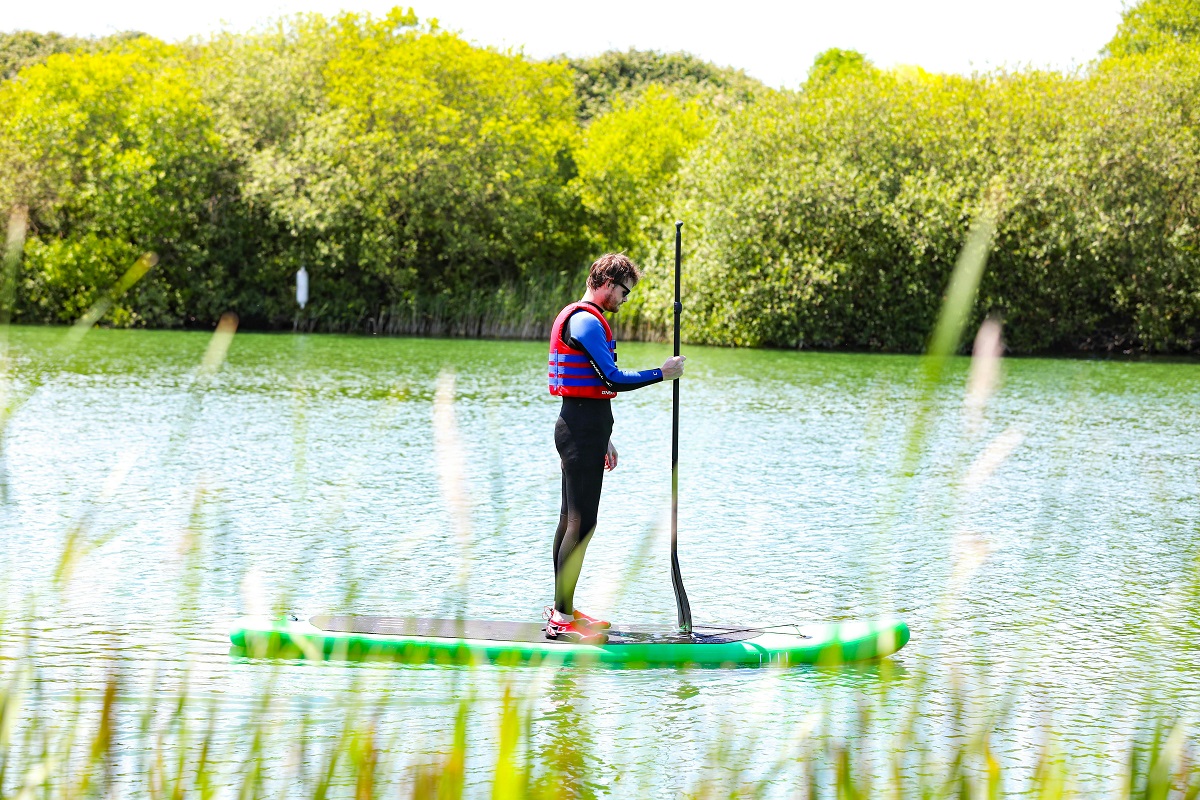
Even seasoned swimmers sometimes wobble when they first try paddle boarding. Learning how to paddle board involves more than just hopping on a board—it requires balance, core strength, and focus. Paddle boards demand a different type of balance than swimming or kayaking, and your core muscles, legs, and even mental focus all play a role in keeping you upright.
Common reasons people struggle include:
- Leaning too far forward or backward
- Stiffening your body instead of staying relaxed
- Looking down at your feet instead of ahead
- Picking boards that are too narrow or unstable for beginners
Understanding these common pitfalls can help you avoid them before you even step on the board.
What’s the Best Paddle Board for Beginners?
Your choice of paddle board can make a huge difference in how easy it is to stand. Beginners often benefit from boards that are:
- Wider: More stability makes balancing easier
- Thicker: Increased buoyancy helps keep you afloat
- Longer: Provides smoother movement through the water
Inflatable boards are also popular for beginners because they’re forgiving and less intimidating if you fall.
How to Prepare Before You Step on the Board
Preparation is key. Even before you touch the water, take a few steps to get ready:
- Check the water conditions: Calm water is best when learning. Avoid waves or strong currents.
- Wear proper gear: A life jacket or personal flotation device (PFD) is a must. Non-slip water shoes can help if the board gets slippery.
- Warm up your muscles: Stretch your legs, core, and arms to help with balance.
- Choose the right stance: Start by kneeling or sitting to get a feel for the board.
Step-by-Step Guide: How to Stand on a Paddle Board Without Losing Your Balance
Step 1: Start on Your Knees
Before standing, get comfortable on the board by kneeling:
- Keep your knees shoulder-width apart
- Place your paddle across the board for support
- Focus on keeping your core engaged
Starting on your knees lets you get used to the board’s movement and reduces the risk of falling right away.
Step 2: Find Your Center of Gravity
Balance comes from your center of gravity. Here’s how to find it:
- Keep your feet hip-width apart
- Bend your knees slightly
- Distribute your weight evenly between both feet
- Relax your shoulders and avoid leaning too far forward or backward
Step 3: Stand Up Slowly
Rushing will throw off your balance. Follow these tips:
- Bring one foot up at a time from the kneeling position
- Keep your knees bent and core tight
- Look straight ahead instead of down at your feet
- Place your feet where your knees were, maintaining shoulder-width spacing
Step 4: Adjust Your Stance as Needed
Once standing, small adjustments can prevent wobbling:
- Shift your weight slightly forward, backward, or side to side as the board moves
- Keep your knees flexible like shock absorbers
- Move your arms for balance instead of stiffening your body
Step 5: Paddle with Confidence
Your paddle can act as both propulsion and a stabilizer:
- Plant the paddle in the water to regain balance if you wobble
- Use smooth, even strokes instead of abrupt movements
- Keep the paddle close to your body, not far out
Tips for Improving Your Balance Quickly
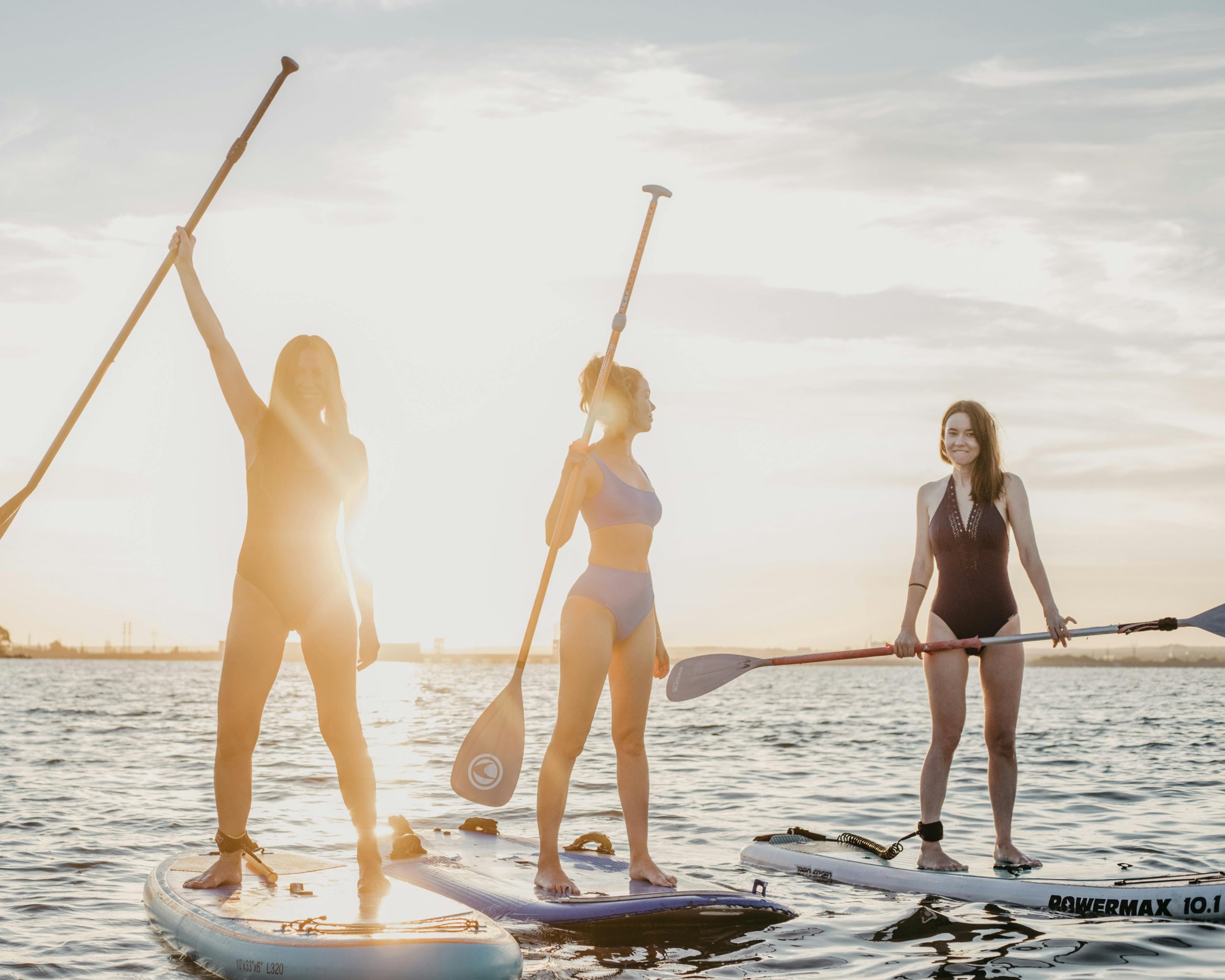
Balance is something you can train. Here are some tips to speed up the learning curve:
- Practice core exercises: Planks, squats, and yoga improve stability
- Focus on your breathing: Slow, deep breaths keep you calm
- Try on flat water first: Avoid waves until you’re comfortable
- Visualize success: Imagine yourself standing confidently before stepping on the board
Common Mistakes and How to Avoid Them
Even with preparation, beginners make mistakes. Knowing them in advance can help:
- Looking down constantly: Keeps your head out of alignment and throws off balance
- Locking your knees: Makes it harder to adjust to the board’s movement
- Gripping the paddle too tightly: Tension travels through your body and destabilizes you
- Leaning in one direction: Causes the board to tilt and increases the risk of falling
What to Do If You Fall
Falling is part of learning. Here’s how to stay safe and get back up:
- Fall away from the board to avoid hitting it
- Swim to your knees or grab the board
- Flip the board if necessary (most boards float)
- Climb back on slowly, keeping your center of gravity low
Remember, every fall is a learning opportunity. Even pros fall sometimes!
How to Practice Balance Off the Water
You don’t have to wait for perfect weather or calm lakes to practice. Try these exercises on land:
- Balance on one leg: Improves overall stability
- Use a balance board: Simulates paddle board movement
- Yoga or Pilates: Strengthens core and enhances coordination
- Foam roller drills: Engage stabilizing muscles used on the water
How to Handle Waves or Choppy Water
Once you’re comfortable on flat water, it’s time to tackle more challenging conditions:
- Keep your knees bent and lower your center of gravity
- Make small paddle strokes to stabilize yourself
- Look forward and anticipate the waves instead of reacting suddenly
- Stay relaxed—tension makes it easier to lose balance
How to Know You’re Ready to Paddle Longer Distances
Standing steadily is just the beginning. You’ll know you’re ready to paddle longer distances when:
- You can maintain balance for several minutes at a time
- You can turn the board smoothly without wobbling
- You feel confident in slightly choppy conditions
- You can paddle without constantly looking at your feet
Advanced Tips for Standing Like a Pro
Once you’ve mastered the basics, these tips will elevate your paddle boarding skills:
- Micro-adjust your weight: Subtle shifts prevent wobbling
- Engage your whole body: Use core, legs, and shoulders for stability
- Practice transitions: Move from kneeling to standing quickly without losing balance
- Experiment with foot placement: Slightly staggered stance can improve control
FAQs About Standing on a Paddle Board
Q: How long does it take to learn to stand?
A: Most beginners can stand confidently within a few hours of practice, though balance improves over weeks.
Q: Do I need special shoes?
A: Not necessary, but non-slip water shoes can help on slick boards. Barefoot is fine too.
Q: Can anyone learn to paddle board?
A: Yes! With the right board, calm water, and patience, almost anyone can learn.
Q: Is it okay to practice in a pool?
A: Absolutely. Pools provide calm, controlled conditions perfect for beginners.
Final Thoughts
Learning how to stand on a paddle board without losing your balance is mostly about preparation, patience, and practice. Start on your knees, find your center of gravity, and slowly stand up. Keep your knees bent, core engaged, and eyes forward. Remember that falling is normal, and every attempt builds confidence. With time, you’ll be gliding smoothly across the water, enjoying both the adventure and the workout.
Paddle boarding is as much a mental challenge as a physical one. Stay relaxed, practice regularly, and celebrate your small victories on the water. Soon, standing on a paddle board will feel second nature, letting you enjoy all the calm, scenic, and exhilarating experiences the sport has to offer.